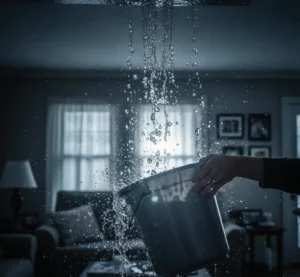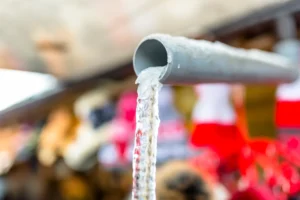
It’s 2 AM on a Tuesday in January, and you wake up to the sound of running water. Your heart races as you realize the sound isn’t coming from a faucet you left on—it’s coming from inside your walls or, worse, from your ceiling. You’re facing every Denver homeowner’s winter nightmare: a frozen or burst pipe.
Don’t panic. While this is serious, knowing exactly what to do in the next few minutes can mean the difference between minor repairs and catastrophic damage costing thousands of dollars.
Denver plumbers handle triple their normal call volume during winter cold snaps, and there’s a reason why: our combination of extreme temperature drops, high altitude, and dramatic day-to-night temperature swings creates the perfect conditions for frozen pipe emergencies. A burst pipe can release over 250 gallons of water per day from just a small crack—and much more from a full break.
This guide walks you through every critical step, from the first 30 seconds of a burst pipe emergency to what happens during professional water damage restoration.
| 🚨 EMERGENCY WATER DAMAGE RESTORATION If you’re dealing with an active burst pipe emergency right now, call Elyon Restoration immediately at (720) 602-6746. We provide 24/7 emergency water extraction, basement flood cleanup, and structural drying services. We can typically arrive within 60-90 minutes anywhere in the Denver metro area. |
Is Your Pipe Frozen, Burst, or Both? Quick Diagnosis
Before you can take the right action, you need to identify what you’re dealing with. Here’s how to tell the difference:
1.Signs Your Pipe is Frozen But NOT Burst Yet
If you notice these signs, you’ve caught the problem early and may be able to prevent a burst:
- No water comes from faucets when you turn them on, or only a tiny trickle flows
- Frost visible on exposed pipes in your basement, crawl space, or garage
- Strange sounds like gurgling, banging, or whistling coming from your pipes
- One faucet works but another doesn’t, especially if the non-working one is on an exterior wall
- Toilet won’t refill after flushing
The good news: You still have time to safely thaw the pipe and prevent a burst. Skip down to our section on safe thawing methods below.
2. Signs Your Pipe Has Already Burst
If you see these signs, this is an emergency that requires immediate action:
- Water actively flowing from walls, ceilings, or floors
- Pooling water in your basement, bathroom, or other rooms
- Water stains appearing on walls or ceiling that grow larger
- Sound of running water when all faucets and appliances are off
- Bulging or sagging ceiling drywall from water weight above
This is a burst pipe emergency. Follow the emergency steps in the next section immediately.
Caught the problem early? Smart thinking—that’s exactly the right approach. The best way to deal with frozen pipe emergencies is to never have one in the first place. Most Denver homeowners don’t realize that simple winterization steps can completely eliminate the risk of costly water damage from frozen pipes. If you want to avoid finding yourself in this situation again next winter, learn the proven strategies that protect your home in our comprehensive guide on how to prevent frozen pipes and water damage in Denver homes. A few hours of preparation now can save you from thousands in water damage repairs later.
Emergency Action Plan: What to Do When a Pipe Bursts (First 5 Minutes)
Every second counts when dealing with a burst pipe. Follow these steps in order—they’re designed to minimize water damage and protect your home.
Step 1: Shut Off Your Water Supply (First 60 Seconds)
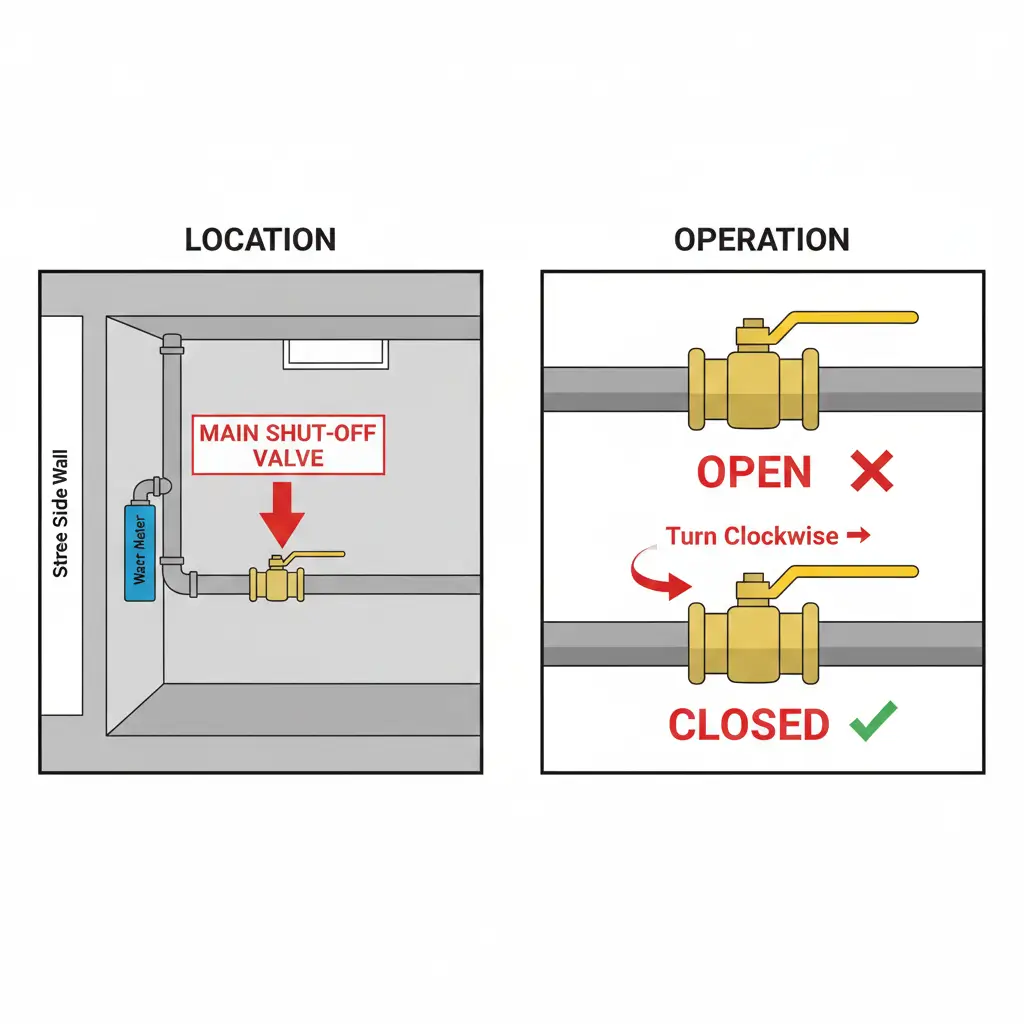
This is your top priority. Stopping the water flow prevents thousands of additional gallons from flooding your home.
Where to find your main water shut-off valve:
- Most Denver homes: Basement wall facing the street, near where the water line enters
- Look near your water meter (usually has a blue or red valve handle)
- Sometimes located by your water heater
- In condos/apartments: May be in a hallway utility closet or contact building management
How to shut it off:
- Turn the valve clockwise (to the right) as far as it will go
- The handle should be perpendicular to the pipe when fully closed
- Water should stop flowing within 30-60 seconds (pressure needs to release)
| ⚠️ SAFETY FIRST If water is pooling near electrical outlets, your electrical panel, or any appliances, do NOT touch the water or attempt to shut anything off yourself. Leave the house immediately and call both an emergency plumber and an electrician. |
Step 2: Open All Your Faucets
Once the main water is off, go to every sink, shower, and tub in your house and turn on both the hot and cold water taps. Leave them open.
Why this matters:
Opening faucets relieves pressure remaining in your pipes and helps any trapped water drain out. This prevents additional pipes from bursting due to pressure buildup and allows you to see if water is still flowing (which means you didn’t fully shut off the main valve).
Step 3: Call Professional Emergency Restoration
Here’s the honest truth: while there are a few things you can safely do yourself for a frozen pipe that hasn’t burst yet (which we’ll cover below), once a pipe bursts, you need professional water damage restoration sevices immediately. Here’s why:
Every hour of delay causes exponentially more damage:
- A small crack releases 250 gallons per day
- A moderate burst can dump 400-600 gallons per hour
- A full pipe separation can release 1,000 gallons per hour or more
Your shop vacuum isn’t enough:
- Can’t extract water from carpet padding, subfloors, or inside walls
- Professionals use truck-mounted extractors that remove 100+ gallons per minute
- Industrial dehumidifiers prevent the mold growth that starts within 24-48 hours
Insurance requires professional documentation: Detailed photos with timestamps, moisture readings from specialized meters, thermal imaging to find hidden water damage, and professional scope of work all maximize your claim.
| 🚨 ELYON RESTORATION DENVER 24/7 EMERGENCY WATER DAMAGE RESTORATION Call NOW: (720) 602-6746 ⏱️ Emergency Water Extraction & Flood Cleanup 💼 Basement Flooding & Crawl Space Water Damage Experts 🏠 Structural Drying & Moisture Control Specialists 🆓 FREE Emergency Consultation & Insurance Estimates |
Step 4: Document the Damage (5 MINUTES)
While waiting for help to arrive (or if you can safely do so), document the damage:
- Take photos and videos of the burst pipe location (if visible)
- Photograph all water damage to walls, ceilings, floors
- Document standing water pooling and the water level
- Photograph any damaged belongings
- Take a photo of your water meter reading
Take more photos than you think you need. Insurance companies require extensive documentation, and you can never have too much evidence for your claim.
How Much Water Can Actually Come Out of a Burst Pipe?
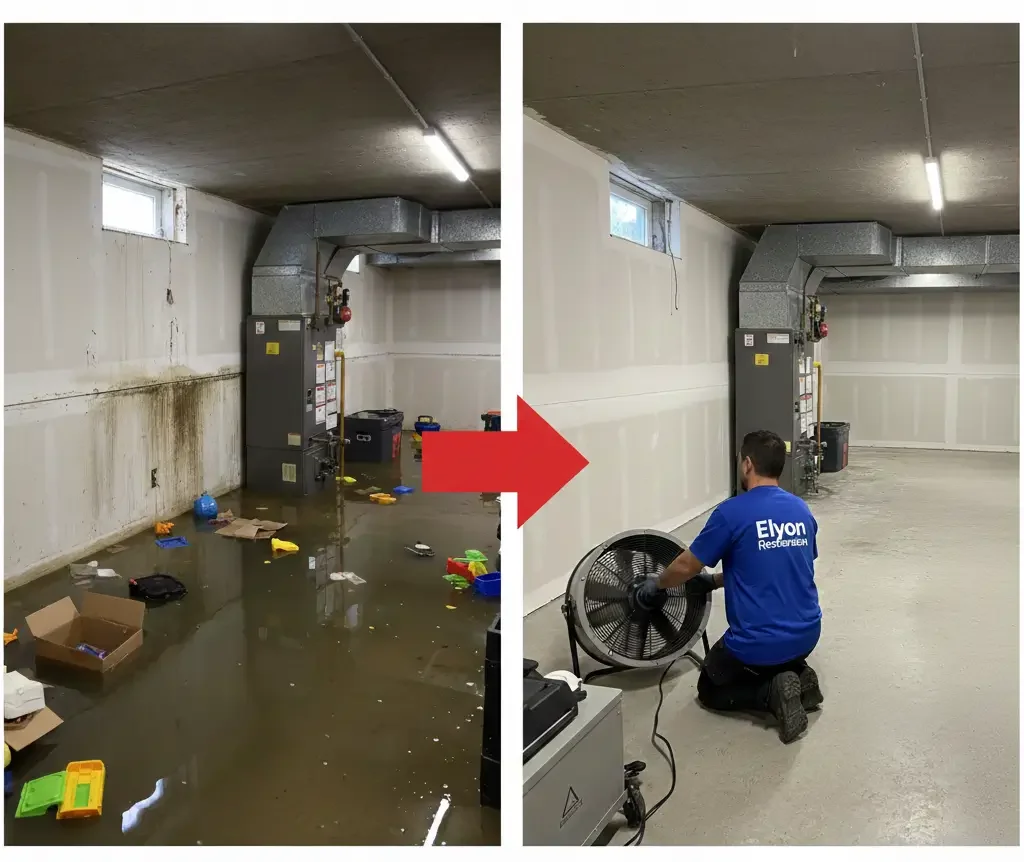
This is one of the most common questions we hear, and the answer often shocks people.
Small crack (1/8 inch opening):
- 250 gallons per DAY
- Enough to fill 4 bathtubs daily
- In just 3 days: 750 gallons flooding your home
Medium burst (1/2 inch opening):
- 400-600 gallons per HOUR
- Overnight (8 hours): 3,200-4,800 gallons
- Can flood an entire basement in hours
Large burst (complete pipe separation):
- Up to 1,000 gallons per HOUR
- Catastrophic damage within minutes
- Can require immediate home evacuation
Why Professional Water Extraction Prevents Costly Mold and Structural Damage
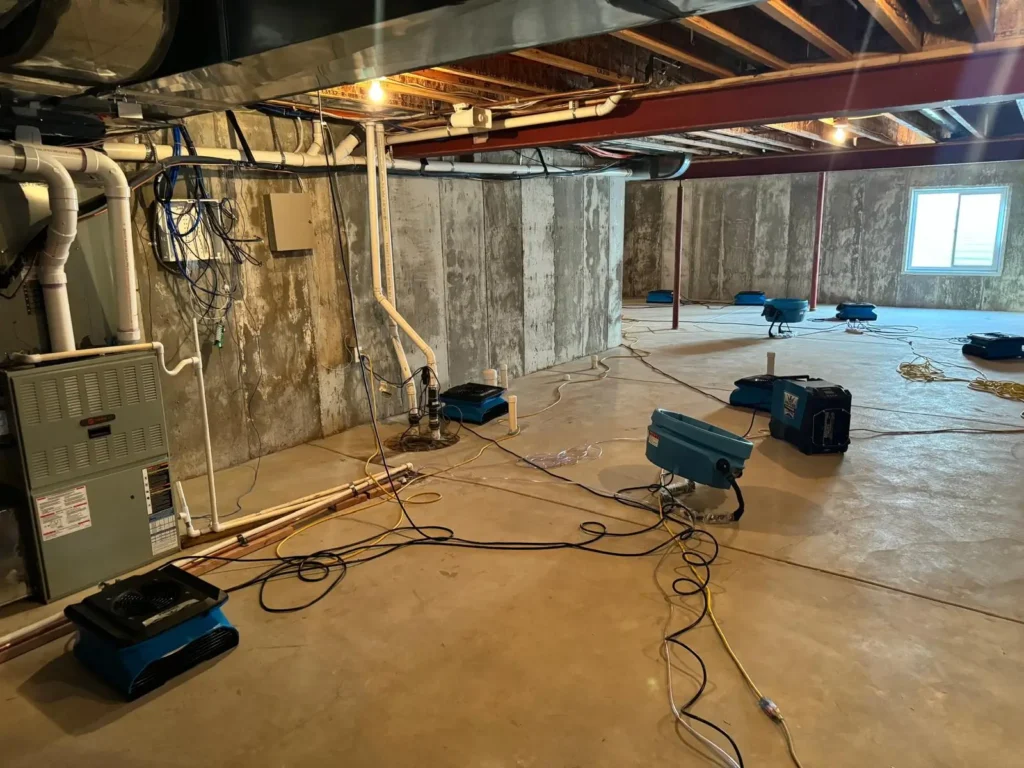
Many homeowners think: “I’ll just use my shop vacuum and some fans.” Here’s why that’s not enough for proper water mitigation and flood cleanup:
Your typical shop vacuum:
- Capacity: ~10 gallons before emptying
- Must empty constantly
- Can’t extract water from carpet padding, insulation, or inside walls
- Ineffective for basement flooding or standing water removal
- Takes multiple days to remove even 250 gallons
Professional truck-mounted extractors and structural drying equipment:
- Extract 100+ gallons per MINUTE
- Reach water in carpet padding, subfloors, wall cavities, and ceiling water damage
- Specialized equipment for basement flood cleanup and crawl space water damage
- Thermal imaging cameras find hidden moisture you can’t see
- Complete water extraction and structural drying typically in 2-4 hours
The 24-48 hour mold growth window: This is critical. Mold begins growing within 48 hours of water exposure. DIY drying often takes 5-7+ days and doesn’t properly address hidden moisture in walls, ceilings, and crawl spaces. Professional structural drying with commercial dehumidifiers and air movers takes 3-5 days with daily moisture monitoring. Miss this window and you’re facing an additional $5,000-15,000 in mold remediation costs.
Special Circumstances: Common Burst Pipe Scenarios
Ceiling Water Damage—What to Do Immediately
If water is dripping or pouring from your ceiling, this situation is particularly dangerous and requires immediate professional ceiling water damage assessment. Water coming from above means:
- The burst pipe is on the second floor, attic, or roof area
- Ceiling drywall can collapse under the weight of water (drywall holds 80+ pounds of water)
- Electrical wiring in the ceiling creates shock hazards
Immediate actions:
- Evacuate the room immediately—ceiling collapse is a real danger
- Turn off electricity to that area at your breaker box (if safe to access)
- Shut off your main water supply
- Call emergency restoration at (720) 602-6746 for immediate ceiling water damage assessment and structural safety evaluation
- Do NOT stand under bulging or sagging ceiling—it can collapse without warning
Basement Flooding From Burst Pipes—Immediate Response
Basement flooding is the most common result of burst pipes in Denver homes, especially during winter. Basements are vulnerable because:
- Many Denver basements have unfinished areas with exposed pipes along cold exterior walls
- Water flows downward, accumulating in the lowest level
- Standing water in basements can damage foundations, walls, and stored belongings
Critical steps for basement flood cleanup:
- Shut off electricity to basement if standing water is present (water + electricity = lethal)
- Do NOT enter basement with standing water until electricity is confirmed off
- Call professional basement flood cleanup at (720) 602-6746
- Remove portable items from upper shelves (if safe)
- Document everything with photos before any cleanup begins
Why professional basement flood cleanup matters: Basements require specialized equipment including submersible pumps for standing water removal, commercial dehumidifiers for moisture control, and air movers for structural drying. DIY attempts often leave moisture in concrete walls and floors, leading to mold growth and foundation damage.
Crawl Space Water Damage—Hidden But Serious
Many Denver homes have crawl spaces where frozen pipes are common but damage goes unnoticed. Crawl space water damage is particularly problematic because:
- Standing water in crawl spaces often goes undetected for days or weeks
- Moisture creates ideal conditions for mold growth on floor joists and insulation
- Water can damage foundation walls and create structural issues
- Humid crawl spaces affect indoor air quality throughout the entire house
Signs you may have crawl space water damage:
- Musty odor throughout the house
- Sagging or soft floors
- Increased humidity levels inside
- Visible mold or mildew on walls or baseboards
If you suspect crawl space water damage, call Elyon immediately at (720) 602-6746. We have specialized equipment for crawl space water extraction, structural drying, and moisture control to prevent long-term damage.
Preventing Future Frozen Pipe Emergencies
Nobody wants to go through this twice. Here are the essential prevention steps:
Before winter arrives:
- Insulate vulnerable pipes in basement, crawl space, attic
- Seal air leaks around pipes
- Disconnect and drain outdoor hoses
- Have your irrigation system professionally winterized
During cold snaps:
- Keep home heat at 55°F minimum (60°F is safer)
- Open cabinet doors under sinks on exterior walls
- Let faucets drip slowly when temperatures drop below 20°F
- Keep garage doors closed if water lines run through garage
The reality is that water damage from frozen pipes is almost entirely preventable with the right preparation. Denver’s winter climate is predictable—we know when the cold snaps are coming. The difference between homeowners who face $10,000+ in water damage and those who sleep soundly through winter storms often comes down to taking a few preventive steps before temperatures drop.
Our detailed guide walks you through everything you need to know to prevent frozen pipes and protect your home from water damage, including Denver-specific strategies for our unique high-altitude climate, step-by-step winterization instructions, and the exact temperatures when you need to take action. Don’t wait until you’re dealing with another emergency—invest an afternoon in prevention and save yourself from costly water damage repairs.
When You Need Emergency Help, Denver Trusts Elyon Restoration
Frozen or burst pipes are among the most stressful emergencies a homeowner can face. At Elyon Restoration, we understand the panic you feel when water is flooding your home at 2 AM on a Wednesday.
Why Denver homeowners choose Elyon:
- 24/7/365 True Emergency Response – Real people answer our phone, not voicemail. Technicians dispatched immediately. 60-90 minute guaranteed response time throughout Denver metro.
- IICRC Certified Professionals – Our technicians are trained in water damage restoration, structural drying, and the latest restoration techniques.
- Complete Water Damage Services – Emergency water extraction, standing water removal, flood cleanup, structural drying, moisture control, and complete restoration under one roof.
Insurance Experts – We work directly with your insurance company, handle all paperwork, and fight for maximum claim approval. You pay only your deductible
| 🚨 EMERGENCY WATER DAMAGE RESTORATION |
|---|
Don’t wait—every minute counts with water damage. We’re here to help 24/7. 📞 (720) 602-6746 💧 Emergency Water Extraction & Standing Water Removal 🔨 Structural Drying & Complete Restoration Services 🆓 FREE Emergency Consultation & Insurance Estimates Serving Denver, Aurora, Lakewood, Arvada, Westminster, Thornton, Centennial, Littleton, Highlands Ranch, Castle Rock, Boulder, and all Front Range communities |