FREQUENTLY ASKED QUESTIONS
Honest guidance when your property needs help most.
Get clear answers about emergency response, insurance claims, and what to expect during restoration.
What is water damage restoration?
Water damage restoration in Denver and the Front Range is the emergency process of extracting water, drying structures, and preventing mold growth after damage from burst pipes (common in Colorado's freeze-thaw cycles), roof leaks, foundation cracks, or storm flooding. Most jobs are completed in 2–7 days depending on extent, with costs ranging from $2,500 to $8,000+ for residential properties; we serve all 20+ Denver metro and Front Range cities and respond within 1–2 hours 24/7. Elyon Restoration can help with a personalized consultation—call (720) 602-6746 or [book online]
How do I know if my home has mold or asbestos problems?
Mold is visible black or green growth, a strong musty odor, or soft spots on drywall/ceilings after water damage. In Colorado, mold grows especially fast in basements due to freeze-thaw cycles and groundwater intrusion; you should have a professional inspection within 48 hours of water damage to prevent mold colonization. We can diagnose and remediate mold per Colorado Department of Public Health standards in 2–5 days; costs range from $1,500–$5,000 for typical residential remediation. Call Elyon at (720) 602-6746 for a personalized mold assessment or [schedule online]
What should I do if my home floods?
Call us immediately: (720) 602-6746 (24/7 emergency line). Our crews respond within 1–2 hours in Denver, Boulder, Colorado Springs, and all Front Range cities to extract water, begin structural drying, and prevent mold growth. We work for you, not your insurance company — we'll walk you through filing your claim, document all damage for your insurer, and help you understand coverage. Colorado residents are often underinsured (Marshall Fire showed 74% of homeowners lacked full replacement coverage); we ensure you recover the full value you deserve. Initial emergency mitigation typically costs $800–$2,500 and is usually covered by homeowner insurance after the deductible. For immediate help, call (720) 602-6746 or [request emergency services].
Is my home at risk for asbestos?
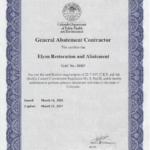
Homes built before 1980 in Colorado often contain asbestos in insulation, flooring, or ceiling tiles. The Colorado Department of Public Health & Environment (CDPHE) requires professional testing of any materials you plan to disturb during renovation or demolition, regardless of age. We hold a Colorado General Abatement Contractor (GAC) license and perform certified asbestos inspection and safe removal; inspection costs $500–$1,200, and removal ranges from $2,000 to $15,000+ depending on extent. Untreated asbestos releases fibers that cause mesothelioma, lung cancer, and asbestosis.
How much does water damage restoration cost?
Emergency water damage restoration in Colorado ranges from $2,500–$15,000+ depending on damage extent, material affected, and whether mold remediation is needed. Initial emergency mitigation (water extraction + drying equipment setup) costs $800–$2,500 and is covered by most homeowner policies. Full restoration including drywall replacement, flooring, painting, and mold remediation ranges $3,500–$12,000 for residential properties. Colorado's freeze-thaw cycles and basement water intrusion are common drivers; we serve Denver, Boulder, Colorado Springs, and all 20+ Front Range cities. We provide detailed estimates within 2 hours and work directly with your insurance adjuster to maximize coverage and minimize your out-of-pocket costs. Get a personalized estimate from Elyon Restoration —call (720) 602-6746 or book online
Do I need to leave my home during the restoration process?
For most water damage (burst pipes, foundation leaks, storm damage), you can remain home during drying (3–7 days). However, if mold is present or if asbestos-containing materials are exposed, we recommend temporary relocation during remediation (2–5 days) to protect respiratory health—extended mold exposure can trigger asthma, bronchitis, and other respiratory issues. If biohazard contamination is discovered (sewage backup or animal waste), relocation is mandatory during cleanup (1–3 days) per Colorado Department of Health regulations. Many homeowner policies cover temporary living expenses (hotel, rental) if relocation is recommended by a certified professional; we document recommendations formally to support your insurance claim. Elyon Restoration can assess your specific situation and help with relocation planning—call (720) 602-6746 or schedule a consultation
What is asbestos abatement?
Asbestos abatement is the safe removal and disposal of asbestos-containing materials (insulation, flooring, ceiling tiles) found in homes and buildings built before 1980. In Colorado, the Colorado Department of Public Health & Environment (CDPHE) requires a licensed General Abatement Contractor (GAC) to perform removal; we hold this license and follow IICRC (Institute of Inspection, Cleaning and Restoration Certification) standards. Improper removal releases microscopic fibers that cause mesothelioma, lung cancer, and asbestosis; professional abatement costs $2,000–$15,000+ depending on material volume and location. The process includes inspection, containment, safe removal, air monitoring, and disposal (3–7 days). Most homeowner insurance covers abatement if it's pre-approved; workers' compensation and liability coverage are mandatory. Elyon is a Colorado GAC-licensed contractor—call (720) 602-6746 for a personalized inspection or book online
Is asbestos dangerous if left undisturbed?
Intact asbestos generally poses no immediate health risk; danger occurs when materials are disturbed during renovation, demolition, or due to age-related deterioration. In Colorado, the freeze-thaw cycle accelerates deterioration of insulation and exterior materials, increasing fiber release risk. CDPHE regulations require professional inspection before any renovation or demolition, regardless of age. If you're remodeling, expanding, or replacing roofing/siding in a pre-1980 home, professional asbestos testing is mandatory in Colorado — inspection costs $500–$1,200. Health risks from inhaled fibers include mesothelioma (15–50 year latency), lung cancer, and asbestosis; there is no safe exposure level. We recommend inspection proactively if you suspect asbestos (visible deterioration, fibrous insulation, or floor tiles showing wear). Get a professional assessment from Elyon—call (720) 602-6746 or schedule an inspection
What regulations govern asbestos removal in Colorado?
Colorado Department of Public Health & Environment (CDPHE) requires professional asbestos inspection before any renovation or demolition of buildings constructed before 1980. Trigger levels: friable asbestos (loose, can be crumbled) requires certified removal; non-friable asbestos (bound in materials) may require encapsulation or removal depending on condition. Only a Colorado General Abatement Contractor (GAC) license holder can legally perform removal. We hold this license and obtain all required CDPHE permits before work begins. Lead-containing materials (paint, sealants) fall under similar CDPHE regulations and often coexist with asbestos. Violations (performing abatement without GAC license, improper disposal, inadequate air monitoring) result in fines $1,000–$10,000+ and potential criminal charges. We maintain full insurance and compliance documentation for every project. Elyon ensures full CDPHE compliance—call (720) 602-6746 for a personalized consultation or book your project
What is biohazard decontamination?
Biohazard decontamination is the safe removal and disinfection of biological materials (blood, bodily fluids, animal waste, sewage) that pose infectious disease risks. Common scenarios include unattended death cleanup, hoarding situations, animal waste remediation (raccoon/bat feces), and sewage backups. We use EPA-approved disinfectants and follow OSHA bloodborne pathogen standards; our technicians hold Bloodborne Pathogen Certification (annual renewal required). Timeline: 4–8 hours for most residential jobs; cost: $1,500–$4,000 depending on contamination extent and area size. This service is often NOT covered by standard homeowner insurance — we work with specialized biohazard insurance and can help you understand coverage options. Colorado Department of Public Health oversees disposal of contaminated materials; we obtain and maintain all required permits. Elyon provides compassionate, professional biohazard cleanup—call (720) 602-6746 for help or request service
What causes water damage in Colorado specifically?
Water damage in Colorado is commonly caused by burst pipes (freeze-thaw cycles), roof leaks, foundation cracks, basement flooding from snowmelt/heavy rain, and hail-driven water penetration through damaged roof/gutters. Colorado's freeze-thaw cycle (freezing nights, warming days, repeated 15–20 times per winter) stresses pipes, causing ruptures that leak 5–10 gallons per minute. Basement water intrusion affects 30%+ of Colorado homes; poor grading, inadequate drainage, and foundation settling all accelerate water entry. Hail storms (Colorado experiences 3–4 severe hail events per year) damage roofing and gutters, creating slow leaks that go undetected for weeks. Snowmelt in spring (March–May) and heavy summer monsoon storms (July–August) are peak water damage seasons. The Marshall Fire (2021) also led to water damage in thousands of homes when firefighting efforts soaked structures and when post-fire heavy rains entered unprotected structures with damaged roofing. We serve all Front Range cities (Denver, Boulder, Colorado Springs, Fort Collins, Longmont, Aurora, Lakewood, and 15+ others) and respond 24/7 to water emergencies. Elyon specializes in Colorado water damage prevention and emergency response—call (720) 602-6746 or get a risk assessment
What is the difference between fire cleanup and fire restoration?
Fire cleanup removes soot, ash, and smoke residue; fire restoration includes cleanup PLUS structural repair, painting, flooring replacement, and full property rebuild. Cleanup (Phase 1) costs $2,000–$5,000 and takes 3–5 days; restoration (Phase 2) costs $8,000–$50,000+ and takes 2–6 weeks depending on damage extent. Small structure fires (kitchen fires, garage fires) typically need cleanup only; catastrophic fires (wildfire, house fire) require full restoration. Colorado's wildfire season (June–October, peak in August–September) drives demand for both services. Marshall Fire (2021) and recent fires (Cameron Peak, East Troublesome) created massive restoration demand across Boulder, Larimer, and surrounding counties. We also handle residential and commercial structure fires. Smoke damage is insidious: odors penetrate into walls, insulation, and HVAC systems; professional remediation with ozone treatment or hydroxyl generators is necessary to eliminate odors completely (not covered by basic cleaning). Full fire restoration cost is almost always covered by homeowner/commercial property insurance after your deductible. Elyon handles both fire cleanup and full restoration—call (720) 602-6746 or request service
How much does fire damage restoration cost in Colorado?
Residential fire damage restoration in Colorado costs $8,000–$50,000+ depending on fire extent, structural damage, and whether hazardous materials (asbestos, lead) are present. Small fires (localized to one room, minimal structural damage): $5,000–$15,000. Medium fires (50% property affected, drywall/framing damage): $15,000–$35,000. Large/catastrophic fires (80%+ damage, structural rebuild): $35,000–$150,000+. Timeline: small fires (1–2 weeks), medium fires (2–4 weeks), catastrophic fires (6 weeks–6 months). We've handled extensive post-wildfire restoration including Marshall Fire (2021) recovery where underinsurance forced many homeowners to self-fund 20–40% of costs. The full cost is covered by homeowner insurance if a claim is filed promptly (within 30 days). We work directly with insurance adjusters and document all damage photographically to maximize your claim approval. Delays in claim filing can result in claim denial or reduced payouts. We also handle mitigation costs (emergency boarding, temporary roof tarping), which are covered as emergency services and often processed faster than full restoration claims. Get a personalized fire restoration estimate from Elyon—call (720) 602-6746 or book a consultation
How do I file a water damage or fire damage insurance claim?
Contact your insurer within 48 hours of discovering damage; document everything with photos/video before cleanup begins; request a professional adjuster assessment; and have a certified restoration company (like Elyon) prepare detailed damage reports. Most homeowner policies require prompt notification (48 hours–30 days) to avoid claim denial. We work directly with insurance adjusters to document damage, explain repair scope, and defend your claim against lowball offers. Common denial triggers: delaying notification, attempting DIY cleanup (destroys evidence), or failing to obtain inspection before repairs. Our detailed damage documentation and repair estimates significantly increase claim approval rates. Claim timeline: notification (immediate) → adjuster inspection (3–5 days) → estimate review (5–10 days) → approval (5–7 days) → work begins. We also help negotiate with adjusters if their estimate is lower than our assessment. Insurance pays restoration directly; you're responsible for your deductible (typically $500–$5,000 depending on policy). For major claims, hiring a public adjuster (3–10% fee) may increase your payout significantly. Elyon handles all claim documentation and negotiation with adjusters—call (720) 602-6746 for personalized guidance.
Do you service areas outside Denver, and how quickly can you respond?
We serve all Front Range communities, including Denver, Boulder, Colorado Springs, Fort Collins, Longmont, Aurora, Lakewood, Broomfield, Castle Rock, Arvada, Westminster, Thornton, Highlands Ranch, Centennial, and 8+ additional cities across 20+ zip codes. Response times: Denver metro (1–2 hours from emergency call), Boulder/Northern Front Range (2–2.5 hours), Colorado Springs area (2.5–3 hours). All response times start from dispatch of the nearest available crew. Areas beyond 2.5–3 hours from our base are outside our typical service radius and may require referrals to partner companies. We maintain 24/7 emergency lines and do not charge for emergency assessment calls—initial site evaluation is always free. Check if we serve your area and get help—call (720) 602-6746 or request service
TESTIMONIAL
What Our Denver Customers Say
 Posted on Google
 Julio Bucio
Trustindex verifies that the original source of the review is Google.
I want to thank the Elyon team with the mold removal services rendered in my home. After detaching our sink in our kitchen, we discovered black mold me and my wife were worried. We were recommending Elyon Restoration, and they delivered! We got on their schedule the same week and they took care of it! Thanks men, for the good work.Posted on Google Jordan PierceRodolfo and his team were professional, honest, and timely! Highly recommend.Posted on Google
 1-800-Packouts DenverElyon Restoration did an outstanding job on my recent restoration project. From start to finish, their attention to detail was impressive. The team was not only skilled but also communicated effectively throughout the entire process. They kept me updated on the progress and were always available to answer any questions I had. The quality of their work exceeded my expectations, and I couldn't be happier with the results. I highly recommend Elyon Restoration for anyone in need of restoration services!Posted on Google
 Devin BewleyRodolfo and his team do an amazing job with bio-hazard clean up. As a property manager, I will certainly be using them again.Posted on Google
 Patricia MartinezWe had a great experience with Elyon Restoration for mold remediation in our home. From start to finish, the team was kind, professional, and punctual. They took the time to walk us through every step of the process and answered all of our questions thoroughly, which helped put our minds at ease during a stressful time. Their attention to detail and commitment to doing the job right really stood out. We felt confident in their work and truly appreciated their respectful and courteous approach. We would absolutely recommend Elyon Restoration to our family and friends without hesitation. Thank you for your outstanding service!Posted on Google
 Staci SargentRodolfo is a really caring professional. I called him when I had a supply leak and he responded quickly and walked me through the insurance claim process. He was onsite daily and I always felt like I knew what was going on. It is not pleasant to have equipment running in your house, but I knew why it was there, so it made it easier to deal with. Thank you!!Posted on Google
 Monica ManzoRodolfo is very professional and dedicated. I recommend him and his team entirely.Posted on Google
 Marina EsquivelGreat service , very responsible and very detailed! I highly recommendPosted on Google
 Lina Cateherine Silva CifuentesI had a serious mold issue in my basement, and I called Rodolfo and the Elyon team for help. They responded incredibly fast and were at my house within an hour. Their knowledge about mold removal is impressive, and they explained the entire process clearly. Plus, their prices were very affordable compared to other companies I researched. Highly recommend them for anyone needing emergency mold services in Denver!Posted on Google
 Lorena TibaquiráRodolfo and the Elyon team were lifesavers when I discovered mold in my home. They arrived quickly and assessed the situation with great expertise. I was pleasantly surprised by how affordable their services were, especially considering the quality of work. If you need emergency mold removal in Denver, look no further!
Emergency Damage Restoration Throughout Denver Metro Area & Front Range
- Arvada
- Aurora
- Boulder
- Brighton
- Broomfield
- Castle Rock
- Centennial
- Colorado Sprinps
- Commerce City
- Denver
- Englewood
- Fort Collins
- Golden
- Greenwood Village
- Highlands Ranch
- Lakewood
- Littleton
- Lone Tree
- Loveland
- Northglenn
- Parker
- Southglenn
- Thornton
- Westminster
- Wheat Ridge